
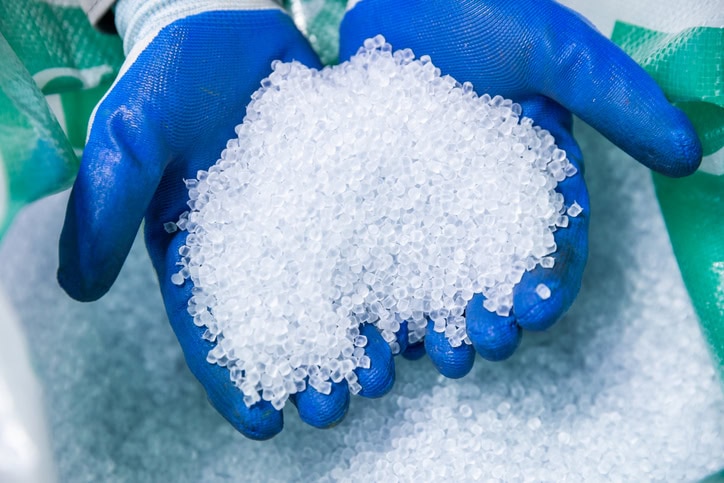
Material selection is one of the most important aspects of any manufacturing process. It defines how the product will survive in its given application and environment, and selecting the right material can be the difference between a long-lasting component and a product that’s destined to fail.
But how to determine the necessary injection molding materials? Knowing the part’s intended application allows engineering teams to help guide you in selecting the best material. Port Erie Plastics’ guide on how to select injection molding materials based on product application is a comprehensive set of examples on matching materials we use every day with common applications.
Define Product Application
When your team has a clear understanding of both your product and its intended design, material selection narrows from vast possibilities to the best options. There are a few parameters to determine and define, however, when discussing your product’s application, both internally and with your manufacturer’s design and engineering team.
- Weigh how much mechanical strength your part will need to avoid defects during application. If you’re having components manufactured that will be part of a bigger assembly, determine if the component can rely on the mechanical strength of the larger piece.
- Ask what forms of resistance are needed for the component to succeed in its environment. This can include resistance to impact, heat, chemicals, UV, and moisture.
- Does the part need to look a specific way? If so, consider whether value-added operations will be needed to alter the material’s appearance once manufacturing has concluded.
Commonly Used Injection Molding Materials
Many injection molded products feature similar or overlapping applications where the polymers used contain shared properties and characteristics that allow the components to thrive in given environments. Below are some of the most commonly used materials with product benefits and application examples.
Polypropylene and Polyethylene
Polypropylene (PP) and polyethylene (PE) are two of the most commonly used injection molding materials, largely because of the many benefits naturally found in both. They are both cost-effective materials and feature good chemical resistance along with impact resistance. Additionally, PP features positive fatigue resistance.
Because both materials are so commonly used, they can be found in numerous applications from general consumer parts to interior automotive parts, and food industry items such as utensil handles.
Acrylonitrile Butadiene Styrene and Polycarbonate
Acrylonitrile butadiene styrene (ABS) and polycarbonate (PC) are right behind PP and PE for commonly used materials in injection molding. These two materials can be used for several applications, including enclosures, consumer electronics pieces, and cosmetic housings. ABS is selected because it balances structural integrity, toughness, and aesthetic properties. It’s also a lightweight material and a good source of electrical conductivity. PC contains high heat resistance, creep resistance, and good toughness, making it ideal for electrical applications.
Nylon and PP
For automotive applications, nylon and PP are good selections for injection molding materials. Both polymers feature strong resistance to elements found in heat, oils, fuels, and the functional aspects of automotive applications.
Contact Port Erie Plastics for Expert Solutions in Injection Molding Materials
While Port Erie Plastics performs multiple variations of plastic manufacturing in our Harborcreek, Pennsylvania, facility, we specialize in injection molding. We started with a single injection molder in 1953 and never lost sight of the manufacturing process that made us who we are today.
Over time, injection molding material options have expanded, all with their own benefits and applications. Our dedicated engineering team continues to invest in education on materials as well as understanding the best applications of those materials, so customers can be confident in our expertise.
Get the most out of your injection molding materials and contact Port Erie Plastics today.