
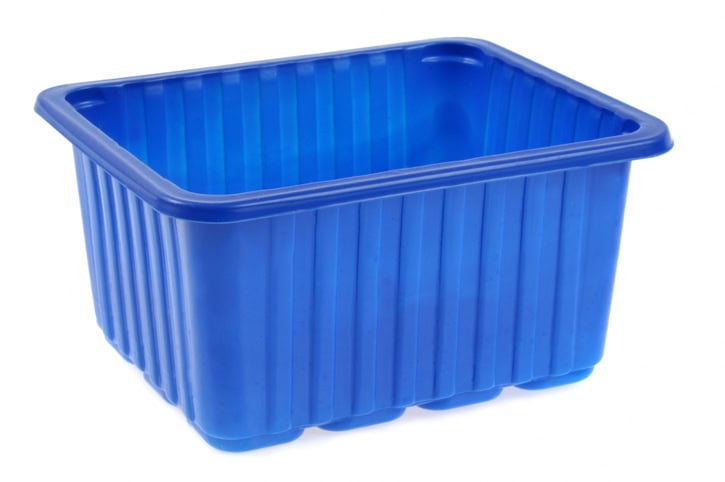
Large part injection molding operations are commonly performed by contract manufacturers for specialized programs that need high-volume components at a cost-effective rate. Heavy-duty plastic housings and enclosures are just two examples of the numerous large parts that can be created through injection molding.
Typically, when injection molding is discussed, most companies think the manufacturing process can only do smaller parts. While it’s true that it might be a little easier for a program to feature smaller components, large part injection molding remains not only a possibility, but a capability.
Port Erie Plastics’ guide on large part injection molding services catered toward heavy-duty housings and enclosures provides design considerations, material selection advice, best tooling practices, and more.
Design Considerations
The larger a part gets, the more important it is that wall thickness consistency is maintained. Uneven sections of wall thickness can lead to increased defects such as sink and warp, it extends cycle times and quickly increases costs to correct the error, and there is residual stress throughout the component.
Additionally, draft, ribbing, and gate placement all become more critical in large part injection molding, especially for housings. Flow length and packing pressure losses rise with size, so careful consideration on those three aspects in design is important.
Material Selection for Large Part Injection Molding
No matter how big or small a component is, material selection is more tied toward part application, its intended environment, and manufacturing than it is to the size of the component. With our focus on housings and enclosures geared toward heavy-duty applications, this begins to narrow down the materials that make the most sense.
ABS, PC, a blend of PC and ABS, PP, HDPE, and PVC all serve is strong options for heavy-duty enclosures and housings because of their stiffness, impact resistance, chemical exposure, UV stability, and flammability needs.
By acknowledging where the enclosure or housing will perform serve will lead design and engineering teams down the correct path in material selection.
Tooling Practices
Tooling is one of the most critical aspects in large part injection molding – and one of the costliest. Large part molds require stiff tooling, vigorous cooling, and precise gating to manage shrink and warp. Cycle times are dominated by cooling of products; therefore, mold design and thermal control place a large impact on costs.
It’s common in large part molding projects that high-tonnage presses are required, but tonnage alone isn’t enough to have a successful program. Large parts are also dependent on bigger shot sizes, platen sizes, and tie-bar spacing. Connect with your manufacturer on how they handle venting, ejection, maintenance, and any trimming or assembly after molding.
Common Challenges
There’s a reason why large part injection molding isn’t often called upon, it’s because of the string of challenges that can come with it. Improper wall thickness is often the cause of product failures because warp, sink, and poor dimensional stability appear once cooling has finalized.
Compared to traditional injection molding, large part programs are also a costly venture not just including the tooling costs associated with it. The per-part cost ratio eventually dips as it does for standard injection molding programs, but it takes longer with larger parts.
Contact Port Erie Plastics for Large Part Injection Molding Services
Port Erie Plastics is a premier plastic processing manufacturing company equipped with numerous production capabilities, including injection molding. That’s how Port Erie got its start, back in 1953 when we first opened with just a single injection molding machine. Now, over 70 years later, we have 90 different machines on location to handle the most demanding injection molding services.
Injection molding of large parts is achievable at Port Erie with maximum clamping forces of 1,650 tons, shot sizes up to 470 ounces, and parts weighing as much as 24 pounds. Injection molding commonly creates small parts, but at Port Erie, we can handle it all. All components manufactured by us undergo thorough testing protocols to ensure part validation and the components can function as designed.
Our customers know that our testing and part validation services are an extension of our overall quality management systems, aimed at keeping us proficient. We’ve been continuously ISO 9001 certified for decades and maintain our commitment to quality by constantly creating new avenues to ensure our customers’ components are defect free and can function in the field of service.
Contact our team today for more information regarding large part injection molding services and how Port Erie Plastics can make a difference in your next project.