

HDPE plastic injection molding is one of the many manufacturing methods how building products and industrial components can be created.
Port Erie Plastics’ complete guide highlights why HDPE, common applications, and other key considerations to make before starting a manufacturing program.
Why HDPE?
Companies that use building products and industrial components, if they need injection molding operations, will commonly elect for HDPE before of the numerous material properties. HDPE combines high impact toughness, strong chemical resistance, low moisture absorption, and economical processing all into one material.
All of these material properties are beneficial for components exposed to rough handling, water, and industrial chemicals. But consider more with this chart.
| Property or Behavior | Practical Significance |
|---|---|
| Impact toughness | Useful in components exposed to drops, knocks, and repeated handling |
| Chemical resistance | Valuable for containers, closures, and protective parts, provided the selected grade is suitable for exposure |
| Low moisture absorption | Supports use in wet environments and typically eliminates routing pre-drying of clean resin |
| Grade-dependent stiffness & crack resistance | Allows selection for different priorities, but requires application-specific evaluation |
| Relatively high molding shrinkage | Makes tooling compensation, packing, cooling, and dimensional inspection important |
Common Building and Industrial Applications
Injection molding supports the manufacturing of discrete components that have repeatable features such as threads, ribs, mounting details, and snap-fit geometry. HDPE plastic injection molding applications can include fittings, caps, closures, housings, crates, totes, and protective components.
Building Product Components
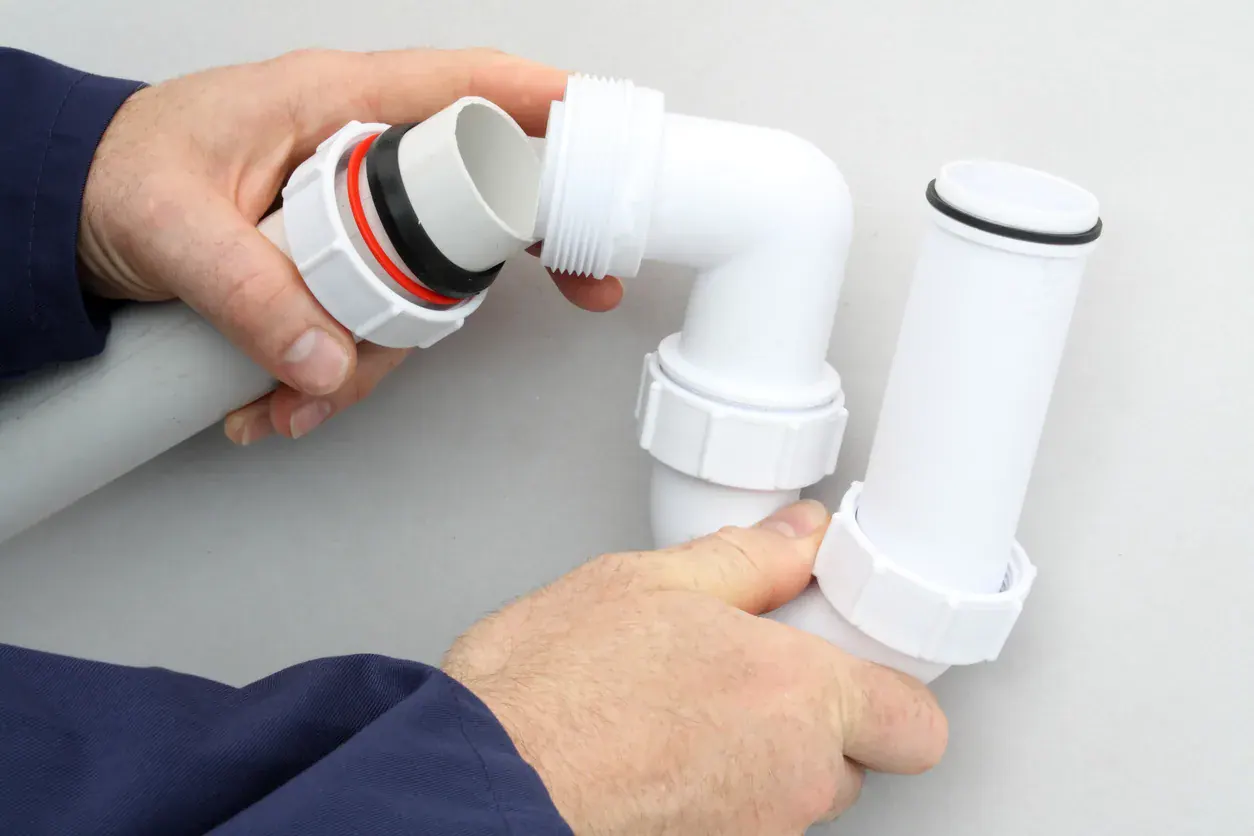
HDPE plastic injection molding specifically can be used to manufacture protective caps, thread protectors, selected pipe fittings, and fluid-system components for building product components.
Other applications include protective housings, construction hardware, and outdoor accessories made with appropriately stabilized grade.
Industrial Components
Many industrial components are manufactured as a result of HDPE plastic injection molding. Some of the most common examples include reusable boxes, drawers, bins, crates, pallets, industrial containers, and protective parts.
Industrial components need that impact resistant material property as well as environmental stress-crack resistance and performance under continuous load and these material properties matter just as much as designed thickness.
Resin Grade Selection
There are critical factors in selecting the right resin grade for HDPE and it starts off with an injection molding graded resin.
Flow & Mold Filling
Melt flow index explains resin flow under standardized test conditions. Selecting a material that factors flow rate alongside mechanical performance matters more than maximizing flow in isolation.
Stiffness, Impact, & Sustained Loading
A part can feel rigid after molding, but can it stay rigid under continuous load? Resin suppliers offer grades featuring enhanced creep resistance, which is what many OEMs elect for knowing their components are headed for industrial applications.
Environmental Stress Cracking
Have documentation on material selection that shows a resin’s environmental stress-crack resistance (ESCR). The ESCR is relevant for chemical container closures and industrial parts that are exposed to detergents and other aggressive substances.
An important note: don’t interpret an ESCR test result as a direct prediction of product service life. Rather, treat it as a selection input and qualify the finished component.
Regulatory Requirements
Building materials and industrial OEMs face some of the most stringent regulations and all components and products must adhere to those standards. Ensure your selected materials fit the bill of requirements.
Potential Defects and Likely Causes
| Defect | Areas to Investigate |
|---|---|
| Warpage | Uneven section thickness, cooling imbalance, gate arrangement, and nonuniform shrinkage |
| Sink marks | Thick sections, oversized ribs, and insufficient effective packing |
| Short shots | Restricted flow, inadequate filling conditions, insufficient melt fluidity |
| Flash | Excessive pressure/temperature, tooling-related issues |
| Dimensional drift | Changes in packaging, cooling, resin behavior |
Partner with Port Erie Plastics for your HDPE Plastic Injection Molding Program
Port Erie Plastics, located in Harborcreek, Pennsylvania, is a full-service plastic fabrication manufacturer with injection molding, plastic extrusion, and structural foam molding capabilities nestled underneath one roof.
HDPE plastic injection molding operations at Port Erie Plastics feature 90 machines ranging in clamping force from 55 to 1,650 tons with maximum shot sizes up to 470 oz. Finished part weights can range from 4 grams to 24 lbs. We offer engineering support throughout the entirety of a manufacturing program to ensure manufacturability as well as clear process controls and specified quality management systems are followed.
Port Erie Plastics has one of the most robust quality management systems in the plastic fabrication industry. Through constant in-house testing, inspection, and proper documentation, we hold ourselves accountable to creating a high-quality component.
Considering an HDPE plastic injection molding program? Contact the experts at Port Erie Plastics today.